Currently Empty: ₹0.00
Montessori vs. Traditional Education: A Comparative Analysis
Education is the cornerstone of a child’s development, shaping not only their intellect but also their character. As parents and educators, we constantly seek the best methods to nurture young minds. Today, we explore two educational philosophies: Montessori and Traditional Education. At Montessori Masters, we craft high-quality Montessori apparatus and materials that align with a child-centric, holistic approach to learning.
Understanding Montessori Education
Montessori education is a child-centered approach developed by Dr. Maria Montessori. It emphasizes the belief that children are naturally curious and capable of self-directed learning. In Montessori classrooms, the environment is carefully prepared with activities that encourage exploration and independence. Here, children learn at their own pace, guided by materials that stimulate cognitive, social, and emotional development.
Key Features of Montessori Education
Child-Centered Learning: In Montessori education, the child is at the center of the learning process. The classroom is designed to foster independence, allowing children to choose activities that interest them, enhancing their intrinsic motivation to learn.
Hands-On Learning: Montessori materials are designed to be manipulative and sensorial, helping children understand abstract concepts through concrete experiences. For instance, Montessori apparatus like the Pink Tower or Counting Abacus help children grasp concepts of size, order, and numbers intuitively.
Mixed-Age Classrooms: Montessori classrooms typically include mixed-age groups, encouraging peer learning. Older children reinforce their knowledge by helping younger ones, fostering a sense of community and collaboration.
Holistic Development: Montessori education focuses on the overall development of the child, including social, emotional, physical, and cognitive growth. This approach aligns with the view that education should nurture the whole child, enabling them to contribute positively to society.
Traditional Education: An Overview
Traditional education, in contrast, follows a more structured and teacher-centered approach. The curriculum is usually standardized, with a focus on academic achievement and testing. Children in traditional classrooms often follow a set schedule, with learning directed by the teacher.
Key Features of Traditional Education
Teacher-Centered Learning: In traditional education, the teacher is the primary source of knowledge, guiding the class through a predefined curriculum. The emphasis is on passive learning, where children absorb information through instruction.
Standardized Curriculum: Traditional education often follows a one-size-fits-all curriculum, with a focus on core subjects like math, science, and language. There is less flexibility to accommodate individual learning styles or interests.
Grade-Level Segregation: Students are typically grouped by age and expected to progress at the same pace. This can sometimes lead to children feeling left behind or unchallenged, depending on their individual abilities.
Assessment-Oriented: Traditional education relies heavily on testing and grading to measure a child’s performance. This can create a competitive environment, sometimes placing undue pressure on young learners.
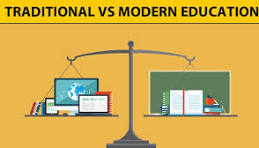
Montessori vs. Traditional Education: A Comparative Analysis
When comparing Montessori and traditional education, it’s essential to consider the unique needs of each child. Montessori education offers a flexible, nurturing environment that encourages self-discipline, creativity, and a love for learning. Traditional education, while structured and systematic, may not cater to the diverse learning needs of all children.
Individualized Learning vs. Standardized Learning
Montessori education celebrates the uniqueness of each child. Children learn at their own pace, pursuing their interests. This individualized approach contrasts with traditional education, where the standardized curriculum may not always align with a child’s natural learning rhythm.
Intrinsic Motivation vs. External Rewards
Montessori education fosters intrinsic motivation by allowing children to engage in activities they find meaningful. Success is measured by the child’s sense of accomplishment rather than external rewards like grades. In traditional education, external motivation, such as grades and praise, is often used to encourage learning.
Preparation for Life vs. Academic Focus
Montessori education prepares children for life, emphasizing skills like problem-solving, empathy, and independence. This holistic view aligns with the belief that education should contribute to the betterment of society. Traditional education, with its academic focus, prioritizes knowledge acquisition, which may sometimes overlook the importance of developing character and life skills.
Choosing the Right Path for Your Child
Both Montessori and traditional education have their merits. The decision ultimately depends on the child’s personality, learning style, and the values of the family. At Montessori Masters, we believe in an educational approach that nurtures the whole child, empowering them to reach their full potential and contribute meaningfully to society.
Montessori Masters: Supporting Your Child’s Journey
As makers of Montessori apparatus and materials, Montessori Masters is committed to providing high-quality, educationally enriching products that support the Montessori philosophy. Our materials are crafted with care, fostering hands-on learning experiences that cultivate curiosity, independence, and a lifelong love for learning.
Final Thoughts
Education is more than just academics; it’s about nurturing a child’s potential to become a responsible, compassionate member of society. Montessori education offers an environment that supports this holistic development, aligning with the view that education should be a shared responsibility of family and society. Whether you choose Montessori or traditional education, the goal should always be to help your child grow into a well-rounded individual ready to contribute to the advancement of civilization.
This blog is designed to help parents and educators understand the differences between Montessori and traditional education, offering insights into the unique benefits of the Montessori approach. If you’re interested in exploring Montessori materials for your child’s learning journey, visit Montessori Masters for high-quality, handmade Montessori apparatus and Quiet Books.



 MM250
MM250